
Every day, more than a billion payments are processed globally. Take a closer look though and you'll find that in the US alone, nearly 170,000 of those daily charges are fraudulent. All the while, compliance teams at major financial institutions are tracking regulatory changes across dozens of jurisdictions simultaneously, in real time.
No human team can operate on that scale. But an AI agent can.
Fintech has more incentive to deploy agentic AI than almost any other industry precisely because the demands of financial services seem purpose-built for what agents do best: process vast volumes of data, act in real time, and do it continuously without fatigue.
Companies like J.P. Morgan, Robinhood, and Gradient Labs are already moving aggressively in this direction. In this article you'll see how and why fintech is moving towards an agentic AI future.
Why Fintech Is a Perfect Environment for AI Agents
Financial services generate more structured and unstructured data than almost any other industry. Every transaction, regulatory filing, customer interaction, market signal, support ticket, and earnings call produces data.
At human scale, that signal becomes noise. Compliance analysts can only read so many documents. Fraud teams can only review so many flagged transactions. Customer operations teams can only handle so many concurrent queries. The gap between the data that exists and the data that is acted on never shrinks.
AI agents close that gap in a way that traditional automation cannot. Rules-based systems can automate known patterns, but they cannot adapt to new fraud vectors, interpret the nuance of a regulatory update, or understand why a customer's behaviour has changed. Agents, powered by large language models and real-time data pipelines, can do all three simultaneously.
Critically, fintech's data environment is not just large, but fast. Financial decisions often need to be made in milliseconds. A fraud signal acted on in 200 milliseconds versus 2 seconds is the difference between blocking a transaction and a customer losing money. A compliance flag raised the same day a regulatory change takes effect versus three weeks later is the difference between an adjustment and a potential regulatory violation. Speed is a hard requirement for financial services.
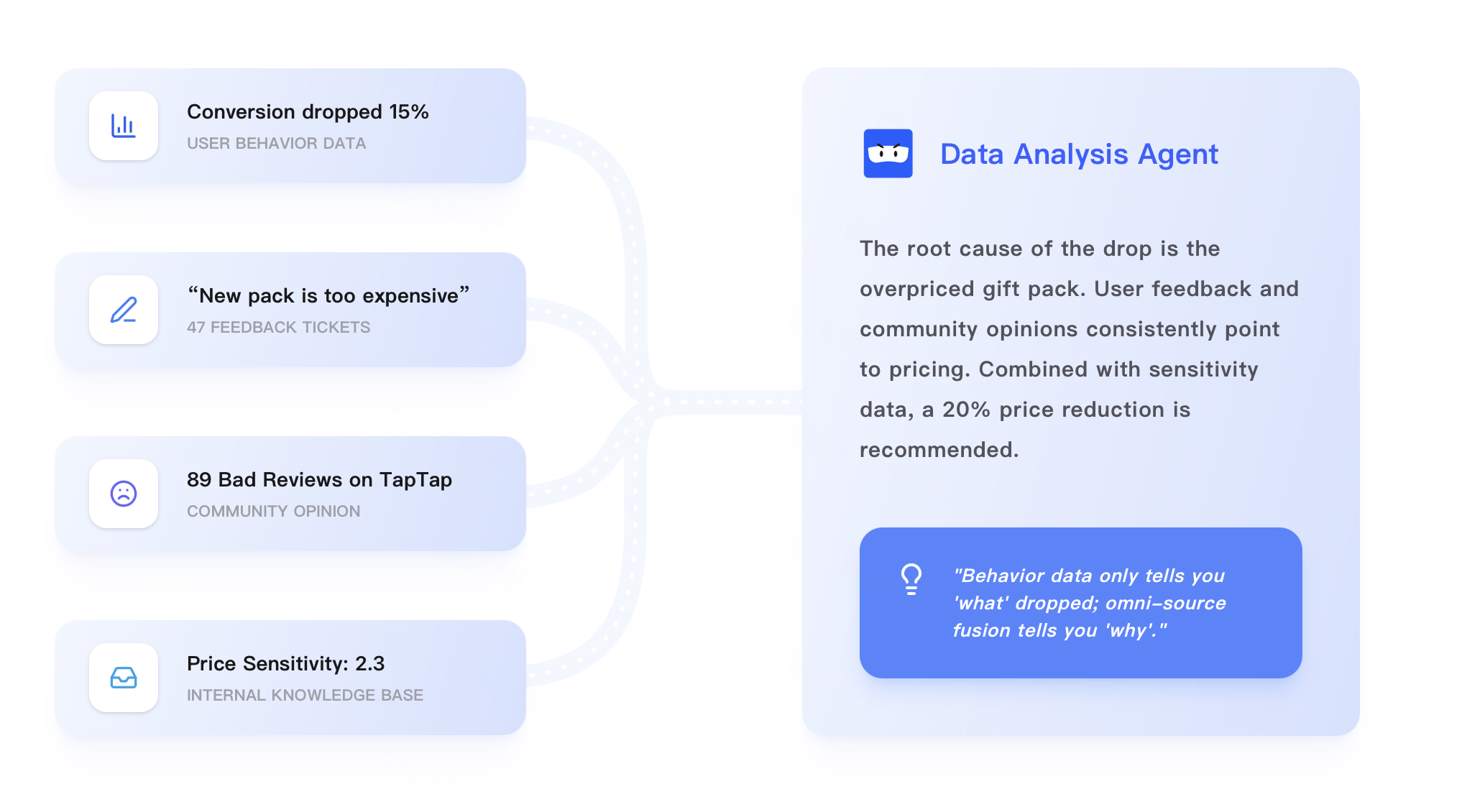
Three Key Challenges Facing Fintech
Regulatory Monitoring
The compliance function at most financial institutions is enormous, expensive, and perpetually overwhelmed. Teams must track regulatory changes across multiple jurisdictions, monitor transactions for violations, and maintain complete audit trails for every decision, all within a continuously evolving regulatory environment.
Today, this work is largely manual. Analysts read regulatory updates, interpret their implications, and update internal policies and controls. This process is slow, prone to human error, and impossible to run at the speed financial markets move.
AI agents approach this differently. Rather than waiting for a human analyst to read and interpret a regulatory update, an agent can ingest regulatory feeds in real time, map changes to affected internal processes, flag required policy updates, and generate draft compliance documentation automatically. Monitoring of transactions for violations shifts from batch review to continuous surveillance. Audit trails are generated as a byproduct of agent operation, not as a separate manual task.
For institutions where a single compliance failure can carry seven-figure fines and reputational damage, the value of continuous, automated regulatory monitoring is significant.
Payment Processing
Over a billion payments flow through the global financial system every day. Behind each one is a web of multi-system processes containing dispute management and fraud screening, with much of it still handled through a manual process.
AI agents compress this process. Reconciliation that previously ran overnight can run continuously. Exceptions and discrepancies surface instantly rather than the following morning. Dispute correspondence, which are unstructured, can be read, classified, and responded to autonomously for the majority of cases, with complex exceptions escalated to human agents with full context already assembled. The result is faster resolution, lower operational cost, and meaningfully better customer experience at no additional headcount.
Fraud Detection
In the US alone, nearly 170,000 unauthorised credit charges occur every day. The current approach has two fundamental limitations: it's slow, and cannot adapt to novel fraud vectors.
Rules-based fraud systems are written by humans based on patterns that have already been observed. Sophisticated fraud, by definition, finds the gaps in those rules. And even when a transaction is correctly flagged, the time between flagging and action creates a window in which damage occurs.
AI agents approach fraud detection fundamentally differently. Rather than matching transactions against predefined rules, agents monitor behavioural patterns in real time and detect anomalies as they emerge. Detection speed increases from hours to milliseconds. And the system continuously learns, meaning its ability to detect novel fraud improves over time rather than remaining static until a human updates the rulebook.
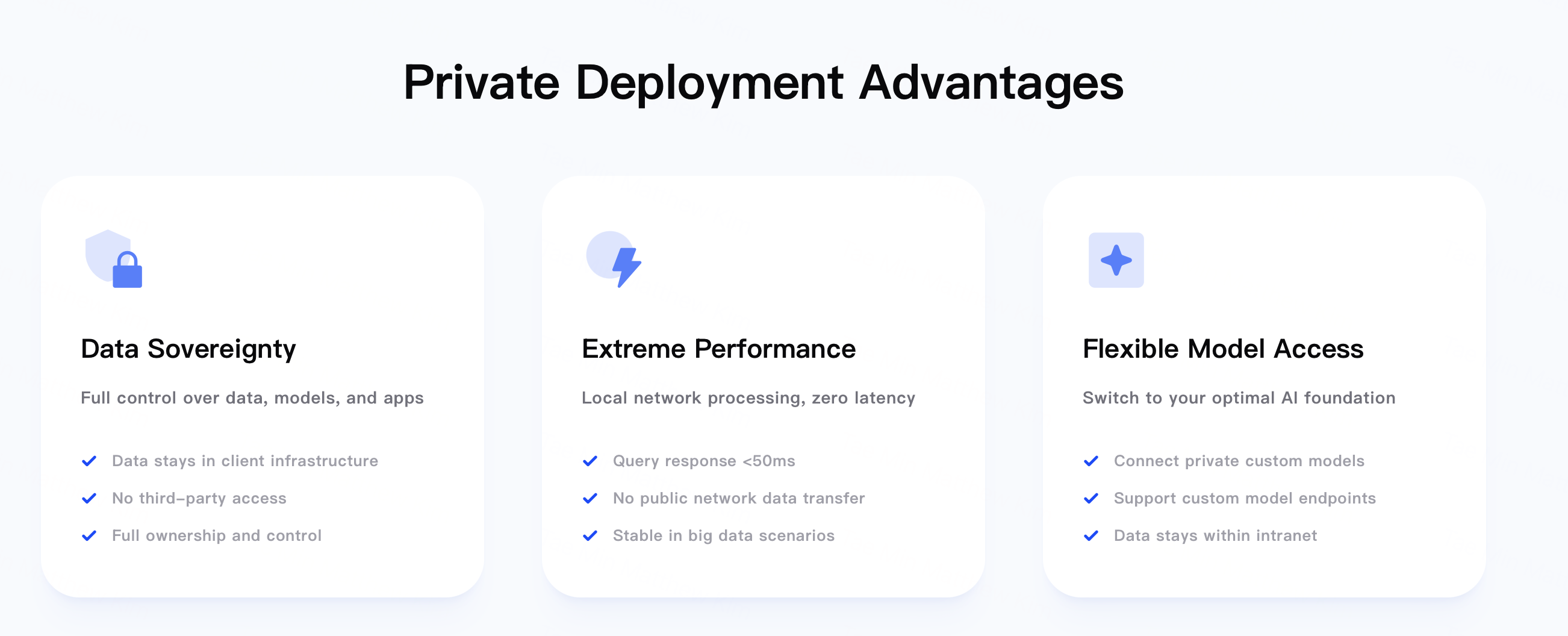
Why Self-Hosted?
Most enterprise AI tools operate on a SaaS model: data is sent to a third-party provider's cloud infrastructure, processed, and returned. For many industries, this is an acceptable trade-off, but not for financial services. Here's why:
Data sovereignty. Financial data is among the most sensitive in existence. Sending this data through third-party cloud infrastructure raises regulatory and privacy concerns that many financial institutions simply can't do.
Regulatory compliance. Many financial regulators require institutions to maintain direct control over the systems that process sensitive customer data. Self-hosted agents make this compliance demonstrably achievable.
Auditability. Self-hosted models give institutions the ability to create custom audit trails that can meet regulatory scrutiny.
Latency. For real-time fraud detection and algorithmic trading applications, even the network round-trip to a cloud provider adds latency that self-hosting eliminates. At the speeds financial markets operate, that difference matters.
How ThinkingAI's Agentic Engine Addresses the Fintech Opportunity
ThinkingAI's Agentic Engine is built for precisely this environment. Designed for live service operations at scale, it brings together the continuous monitoring, real-time action, and contextual intelligence that fintech's unique demands require, all while addressing the governance and auditability requirements that financial institutions cannot compromise on.
Where traditional analytics platforms surface insights and leave action to human teams, Agentic Engine closes the loop and can move from signal detection to autonomous action without the latency of a human review cycle. Its ability to synthesise both structured transaction data and unstructured data gives financial institutions the unified picture that separate BI and qualitative teams have historically struggled to produce.
For institutions evaluating self-hosted deployment, Agentic Engine's architecture is designed to operate within environments where they can maintain total data sovereignty.
To see how ThinkingAI's Agentic Engine can help live service financial operations at scale, book a demo with us today.